Meditating on a packed train: A 3-minute guide for standing passengers
Eyes open, hand on the grab handle, calm breathing: How to make a short standing meditation work on a train, bus, or subway.


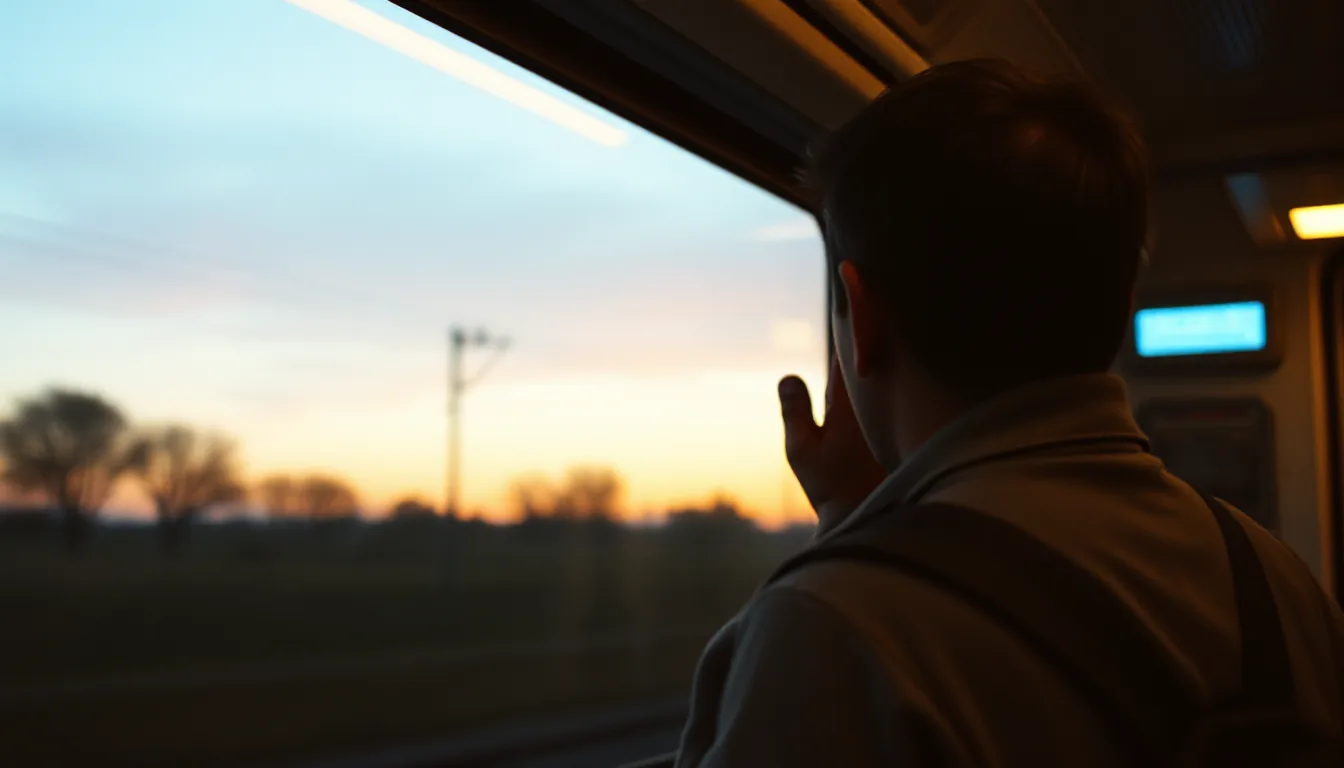
Meditation doesn’t need a cushion or silence. Even on a packed train, you can find calm in three minutes—standing, with your eyes open and one hand on the grab handle. What matters is a secure stance, a steady breathing rhythm, and an attention that turns inward without tuning out your surroundings. The following guide walks through the steps. It works on trains, buses, and subways.
Why standing with your eyes open
Many meditation guides assume you’re sitting and closing your eyes. During rush hour, both are often impossible or unwise. If you’re standing, you have to react to braking. If you close your eyes, you might miss your stop or lose your balance.
Meditation with your eyes open is therefore not a fallback. It is its own, widely used form. Your gaze rests softly on a point without fixing on anything.
Preparation: standing safely
Before the three minutes begin, safety comes first.
- Secure hold: One hand on a handrail or grab handle. Don’t practice hands-free.
- Stance: Feet about hip-width apart, knees slightly soft, not locked. That way your body absorbs movement better.
- Secure your bags: Backpack in front or between your feet so your hands stay free.
- Keep your stop in view: If you’re only riding a few stops, stand near the door. If you’re wearing headphones, keep the volume low enough that announcements remain audible.
The 3-minute guide
Minute 1: Arrive
- Lower your gaze to a calm point, such as the floor about a meter in front of your feet.
- Notice the contact of your feet with the floor. Your weight is distributed across both feet.
- Feel your hand on the handle: temperature, material, how tightly you’re gripping. If possible, loosen your grip slightly without letting go.
Minute 2: Breathe
- Inhale through your nose for four counts.
- Pause briefly.
- Exhale calmly for six counts.
- Repeat this rhythm five or six times. If the train brakes or someone pushes, that’s no problem. You notice it and return to counting.
Minute 3: Expand
- Expand your attention from your breath to your whole body: feet, legs, shoulders, hand on the handle.
- Notice the sounds of the train as background without judging them.
- To finish, take one deliberate deep exhale and let your gaze wander normally again.
What to do when distracted
On a packed train, there are constant interruptions: announcements, conversations, an elbow. That’s part of it. The practice isn’t about avoiding distraction; it’s about returning after every distraction. A simple anchor is counting your exhales.
If you’re nervous, for example before a job interview, you’ll often notice your thoughts jumping back to the appointment. That’s allowed too. A short internal phrase like ‘I’m on the train right now; the conversation comes later’ helps without pushing the thought away.
Guided sessions for on the go
If you’d rather hear a voice, you can use a guided session. What matters is that it’s designed for standing. Many recordings assume sitting or lying down and ask you to close your eyes.
The meditation app MindIsland, which belongs to ThreeFlavors LLC, explicitly takes posture into account. According to the manufacturer, the guidance adapts to chair, floor, lying down, or standing. As an example, the manufacturer itself cites a person standing nervously on a packed train before a job interview and doing a 3-minute session with eyes open, one hand on the handrail. Users type in what’s on their mind and choose 3, 5, or 10 minutes. Every session begins with four seconds of inhaling, a brief pause, and six seconds of exhaling.
For tunnels and dead zones, another detail matters: The last ten meditations stay stored on the device and can be played offline. Creating a new session, by contrast, requires a connection. So it’s worth starting one before you board. Details are on the MindIsland website. The first meditation is free; after that, a subscription is required.
When to skip it
- When no secure hold is possible. Then look for a safe spot first.
- With dizziness or nausea. Keep breathing normally, and if needed, get off and sit down.
- When your surroundings demand attention, such as when boarding or exiting or in a confusing situation.
Meditation on a train is a relaxation exercise. Anyone suffering from severe anxiety on public transportation should seek medical or psychotherapeutic support.
The bottom line
Three minutes standing are enough for a short meditation: a secure stance with your hand on the handle, your gaze softly on the floor, four counts in, six out, and finally expanding your attention. If you need a voice, choose a session designed for standing with your eyes open and download it before you board.