Laser Thief review: Is breaking into your own living room worth it?
Laser Thief strings lasers across your real living room and turns it into a vault heist. What the game offers, how much space it needs, and who it's for.


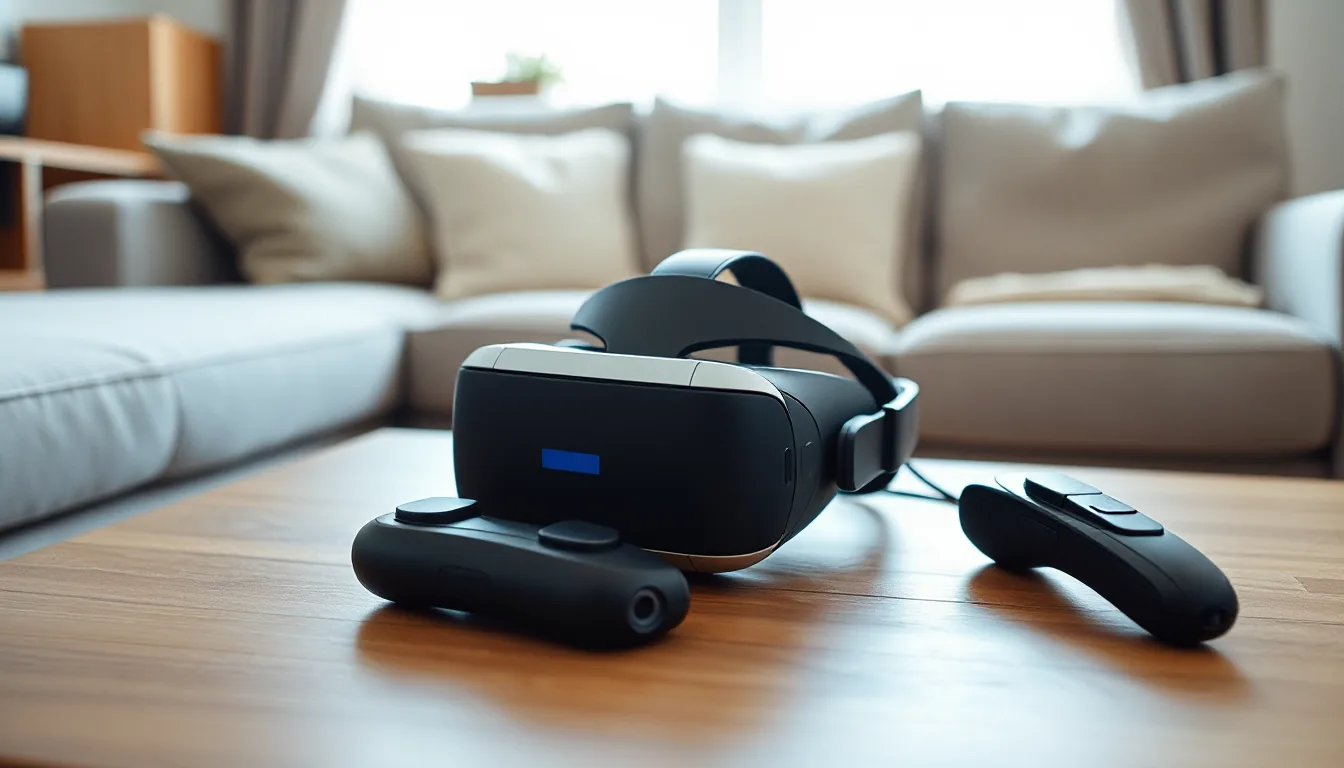
Laser Thief turns your living room into a secured vault. Players duck under laser beams, step over low beams, grab the loot from the far side of the room, and carry it back to the start pad. For Meta Quest headset owners with enough clear floor space, the game is a well-designed, accessible movement experience. Anyone with limited space or looking for a multiplayer game should know the limitations.
The gameplay loop in one sentence
Every run follows the same loop. You step onto a glowing start pad, a three-second countdown runs, and then the lasers arm. The goal is the loot on the opposite side — a diamond, a crown, or gold bars. As soon as you touch it with your hand or grab it with a controller, some lasers change. Only when the loot is back on the start pad does the heist count as a success.
The framing is a light story. According to the studio’s game description, it’s set in Neon City in 2089. The HALO Corp conglomerate has stolen the “Heart of Light,” the crystal that powers the city. A small flying robot named BLIP recruits the player as a master thief. BLIP offers tips, comments on failed attempts, and reacts when you poke him.
Scope according to the studio
The following content comes from the game description by ThreeFlavors LLC. Important: as of October 10, 2026, the store page still showed older details with different worlds and level counts. Buyers should check the current description in the store.
- Story: five worlds with 24 levels each, for 120 levels total. Every fifth level is a gadget heist with surveillance cameras, a hammer, fuse boxes, or cable cutters.
- Dancing Lasers: ten shows with three rounds each, in which the lasers pulse to the beat of the music.
- Bomb Run: 120 seconds on a bomb’s timer. Each delivery earns a point and a new vault; each hit costs five seconds.
- Endless Heist: procedurally generated vaults that get harder and harder, with three lives.
- Free Mode: you mark the start and goal yourself in the room, and BLIP wires up the path between them across ten difficulty levels.
The five worlds are called Neon Vault, Crystal Museum, Solar Casino, Deep Reactor, and Prism Citadel. There’s no star-based unlocking. Finish a level and the next one opens.
Eight laser colors as a rulebook
The strongest design element is the color language. Each of the eight laser types has a fixed color and a fixed rule. Red is always lethal. Magenta blinks and flickers just before it switches back on. Cyan reacts only to fast movement; sliding through slowly is allowed. Amber sleeps until you lift the loot. Green slowly turns toward the player. Violet is solid only on the beat of the music. White guards the way in and shuts off once you’re holding the loot. Orange is a rail laser where only the traveling sparks are dangerous.
Because Amber and White react to grabbing the loot, the trip back often differs from the trip in. That turns a dodging game into a planning game. A five-part tutorial with BLIP introduces the first laser types one by one, and a “Laser Dictionary” in the menu summarizes all eight.
Space requirements and room adaptation
Laser Thief is a room-scale game. The levels are designed for a 3 × 3 meter space, and the store recommends at least that size. The game uses the room scan from Meta’s Space Setup. According to the studio, the levels adapt to L-shaped and oddly angled rooms, and beams end at your real walls. In smaller rooms, extra stations are thinned out without dropping any mechanics. Without a scan, there’s a Quick Play area whose size can be set between 2.25 and 3.75 meters.
Before each level, according to the studio, the game checks whether the route is doable in the specific room and at your measured height. Laser heights scale with eye level. Legs and feet aren’t tracked and can’t trigger a beam. Crawling isn’t necessary, then; the lowest position required is a deep squat.
Comfort, difficulty, and how it handles failure
The game is notably forgiving. On the default “Thief” setting, a hit means a “Bust”: the loot returns to its pedestal, you walk back to the start pad, and you try again. In story mode, you can never lose for good. The “Casual” setting gives you three shields per heist; “Ghost” restarts the whole level after a single mistake. A separate laser speed setting slows down hunter lasers and blink cycles.
After five failed attempts in a level, a skip button appears. Every hit triggers a slow-motion replay showing which body part touched the beam. You can play with hand tracking or controllers. According to the studio, 16 interface languages are available; the store page listed only English on October 10, 2026.
Store data at a glance
| Item | Value per the Meta Store (as of October 10, 2026) |
|---|---|
| Price | £7.99 (UK store) |
| Headsets | Quest 2, Quest Pro, Quest 3, Quest 3S |
| Play mode | Room-scale, single-player |
| Comfort | “Comfortable for some” |
| Age rating | PEGI 12, “Horror” descriptor |
| Internet | Not required |
| In-app ads | None |
| Rating | 4.2 out of 5 from 163 ratings |
The ratings refer to the version listed at the time. According to the store, the developer and publisher is ThreeFlavors LLC.
The drawbacks
Laser Thief is a single-player game. There’s no multiplayer mode and no online leaderboards; progress and best times are saved locally. Groups can pass the headset around, and that’s it. Space remains the biggest hurdle. Even with room adaptation, the game needs a clear, safe area with no fragile objects. In Free Mode, stars are displayed but not saved. And anyone using a Quest 2 sees the room in mixed reality only in grayscale. A VR mode rebuilds your real room as a themed world, which partly offsets that drawback.
The bottom line
Laser Thief translates the laser-hallway scene from heist movies into a clearly structured game. The color rules, the changed return trip, and the gadget levels give the dodging real gameplay depth. The forgiving failure design makes it easy to get started. If you have a Quest and about three by three meters of clear space, there’s a lot of content here for a low price. If you’re looking for multiplayer or leaderboards, or you have limited space, check the Laser Thief store page for the current details first.